Forget chasing calories — it’s time to fix how your body actually moves.
Why Your ‘Efficient’ Workout Is Keeping You Weak, Unbalanced — and Wearing Down Your Joints
We’ve all seen the charts:
“Burn 160 calories in 15 minutes with this intense workout!”
Fitness culture glorifies speed — the promise of maximum calorie burn in minimum time. But what if this obsession with efficiency is exactly what’s making us weaker, more unbalanced, and quietly wearing out our joints?
Think of it like driving with misaligned wheels: the faster you go, the more damage you do. Let’s break down how the most popular workouts stack up — and why water walking, the most overlooked movement discipline, might be the ultimate all-rounder your body truly needs.
The Popular Choices (According to Fitness Culture)
1. Running (15 minutes)
The pitch: “High intensity, maximum burn!”
Reality: Great for cardio, but unless you have perfect form, you’re reinforcing muscle imbalances with every stride. That slight hip drop or shoulder twist? Over time, it becomes permanent — and your knees and hips pay the price.
2. HIIT Workouts (12–15 minutes)
The pitch: “Afterburn effect torches calories for hours!”
Reality: When fatigue hits, form collapses. Stronger muscles take over for weaker ones, loading the joints unevenly — a fast track to overuse injuries.
3. Cycling (20 minutes)
The pitch: “Low impact, high calorie burn!”
Reality: It’s gentler on the joints, but mostly works your quads while your core and stabilisers take a free ride. Great legs, weak rotation — and tight hips that often make back pain worse.
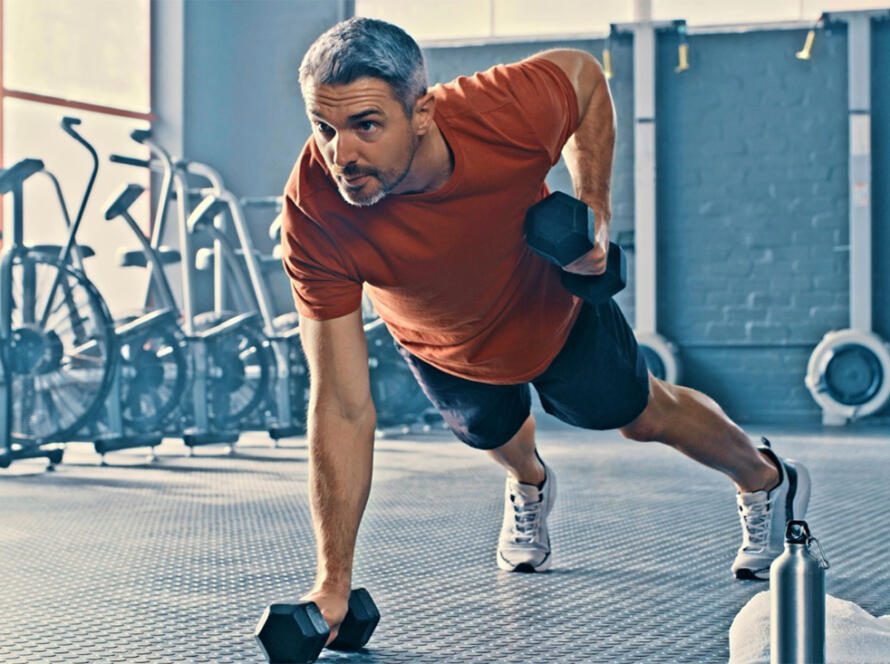
4. Weight Training (25 minutes)
The pitch: “Build muscle, boost metabolism!”
Reality: Too many cheat with momentum. Ask yourself — do you feel your glutes in every squat, or just your back and quads powering through? Done wrong, it’s compressive on the spine and knees.
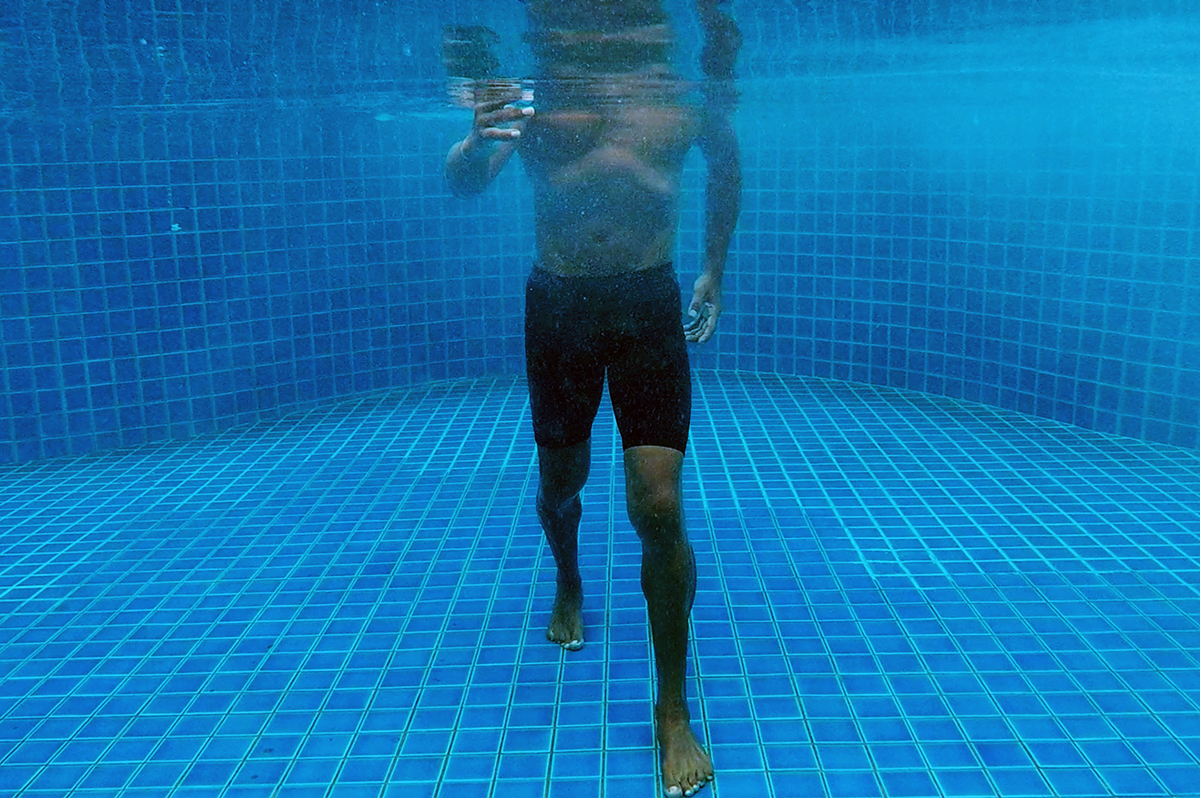
The Secret Winner: Water Walking (25 minutes)
Yes, it takes slightly longer to burn those 160 calories — but here’s what you’re getting that no other exercise delivers.
The Water Difference
- No cheating: Water’s density kills momentum — every movement demands conscious control.
- Automatic balance training: The unstable environment forces your stabilisers to work continuously.
- 360° resistance: Unlike gravity-based exercises, water challenges you from every direction.
- Joint renewal: The buoyancy unloads up to 80% of your body weight, giving joints space to move and re-lubricate naturally — a vital reset for midlife bodies.
Research shows that chest-deep water walking activates up to 27% more stabiliser muscles than walking on land, while drastically reducing joint strain. That’s not just exercise — that’s re-education for your body.
To put it into perspective, 25 minutes of water walking roughly equates to 4,000 steps — but with far greater muscular engagement and joint protection. In other words, it’s the step count your body actually benefits from.
What Really Happens During Those 25 Minutes
While you’re focused on moving forward, your body is quietly:
- Waking up dormant glute medius muscles
- Engaging deep core stabilisers that running ignores
- Correcting left–right imbalances naturally
- Improving proprioception — your body’s awareness in space
- Nourishing cartilage through gentle pressure changes that feed joint fluid
- Building functional strength that carries into daily life
It’s not just calorie burn — it’s neuromuscular recalibration.
I’ve watched clients rediscover pain-free movement and muscle groups they never knew existed during their first intentional water-walking session.
The Comparison They Don’t Want You to See
|
Exercise |
Time for 160 cal |
Core Engagement |
Muscle Balance |
Joint Stress |
Functional Carryover |
|
Running |
15 min |
Moderate |
Poor |
High |
Limited |
|
HIIT |
12–15 min |
Variable |
Poor |
High |
Moderate |
|
Cycling |
20 min |
Low |
Poor |
Medium |
Low |
|
Weight Training |
25 min |
Moderate |
Variable |
Medium |
Moderate |
|
Water Walking |
25 min |
High |
Excellent |
Low |
High |
The “Wow” Moment
That 15-minute run might save you time, but it’s also deepening your imbalances.
Those 25 minutes of water walking? They’re giving you:
- Cardiovascular training
- Strength work
- Balance practice
- Postural correction
- A built-in form of joint therapy
You’d need running + Pilates + balance work to replicate the benefits — and that would take at least 45 minutes.
From Water Walking to Movement Mastery
KunAqua emerged from this principle — turning simple aquatic movement into water walking mastery.
Born from biomechanics, breathwork, and neural retraining, it transforms water walking into a full-body conversation between mind and muscle.
The water becomes your teacher — correcting posture, refining control, and building deep stabiliser strength that gravity hides.
Each step trains the nervous system to move intelligently again — not just harder, but better.
KunAqua’s approach makes you strong from the inside out, restoring the coordination and joint resilience most land-based workouts erode.
The Bottom Line
We’ve been taught to measure exercise by time and calories. But what about movement quality?
What about joint integrity — the quiet foundation of healthy longevity?
Water walking forces your body to move honestly. No shortcuts, no momentum tricks, no dominant side taking over. It’s the ultimate truth-teller for your movement patterns — and the most comprehensive 25-minute workout you’re probably not doing.
Next time you chase efficiency, ask yourself:
Are you saving time now, only to pay for it later with pain, stiffness, and imbalance?
The most efficient workout isn’t the one that burns calories fastest — it’s the one that builds a body that lasts.
Step into the water. Reclaim balance. Protect your joints. Move with mastery.