Most people think building bone strength means lifting weights or pounding pavements. But what if there was a smarter, joint-friendly way to do it—while boosting your cardio, improving your balance, and calming your mind?
Enter JUMPGA.
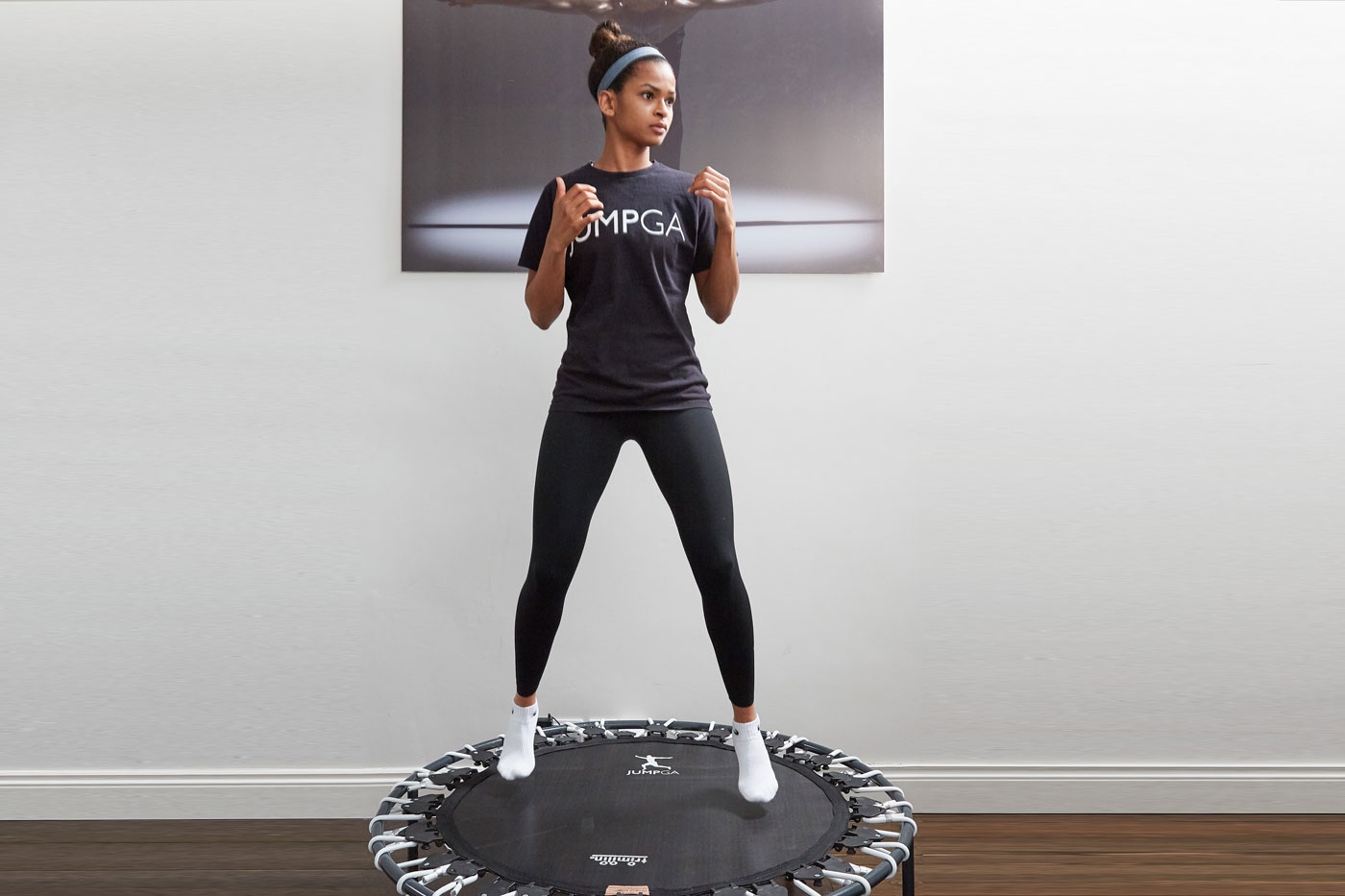
It’s not just a workout. It’s a fusion of high-energy rebounding on a mini-trampoline and the grounding flow of yoga. Together, they hit five major pillars of fitness: cardio, balance, strength, mobility, and flexibility.
You get the muscle-toning, fat-burning power of HIIT—without hammering your joints—and the calming, alignment-based benefits of yoga. It’s sweaty, still, stretchy, and strong. All in one session.
Why It Matters Now
Bone loss doesn’t start when you’re old. It kicks in quietly after your 30s and accelerates in your 40s and 50s—especially for women post-menopause and men with falling testosterone. That means by midlife, your bones are already losing density, putting you at higher risk of fractures and osteoporosis later on.
The good news? You can do something about it.
Studies show that repeated jumping (yes, bouncing) stimulates bone growth. Trampolining in particular has been shown to improve bone density in key areas like the spine and hips. One study even showed that postmenopausal women who trained regularly on mini-trampolines saw measurable increases in bone density and improved bone metabolism.
That’s where JUMPGA comes in.
What Makes JUMPGA Different?
- It’s Efficient
You burn more calories than jogging—around 205 in just 30 minutes. And the effects last: your metabolism stays elevated for up to 24 hours. - It’s Gentle
You still get the benefits of impact, which is crucial for bones, but the trampoline softens the landing. It’s high-impact without the damage. - It’s Holistic
A JUMPGA session might start with powerful bouncing sets—like jumping jacks, ski jumps, or high-knee runs—but it flows into yoga sequences like Warrior poses, Half Moon, and bridge work. Then it ends in Savasana, the deep rest that lets your nervous system catch up. - It’s for Everyone
Whether you’re a beginner or coming back from injury, JUMPGA can be adapted. Use a wall for balance, reduce your bounce height, or shorten the session. The structure is scalable. The benefits still land.
The Science Behind the Sweat
Why does bouncing work for bones?
Because your body reacts to mechanical stress. Every time you jump, your bones get a signal to strengthen. Add controlled landing, core stability, and balance work—and you’ve got a full-body stimulus that goes beyond what standard gym sessions can offer.
JUMPGA also supports the psoas major—a deep core muscle often neglected but essential for posture and spinal support. And unlike traditional weightlifting, rebounding involves constant micro-adjustments, activating stabiliser muscles and improving coordination.
More Than Fitness
JUMPGA doesn’t just build a better body. It builds awareness.
Rooted in yoga tradition, it nods to Raja Yoga—the path of self-mastery. That means you’re not just going through the motions. You’re moving with intent. Aligning your posture. Breathing with purpose. Listening to your body.
This isn’t mindless cardio. It’s conscious movement designed to work with your body, not against it.
Final Word
You don’t need a gym. You don’t need to run marathons.
You just need to bounce—with purpose.
JUMPGA gives you a practical way to future-proof your body. Strong bones. Better balance. A calmer mind.
It’s fun. It’s challenging. And it might just be the smartest thing you do for your health in midlife.
Want to give it a try? Keep an eye out for upcoming sessions and live talks through Meta-Age. Or register your interest and we’ll let you know when JUMPGA’s ready to launch near you.
No fads. No fluff. Just a better way to move.