Lean. Simple. Disciplined.
Fashion and fitness editors, look away now.
Because the truth about style and the male body is simpler than either industry likes to admit.
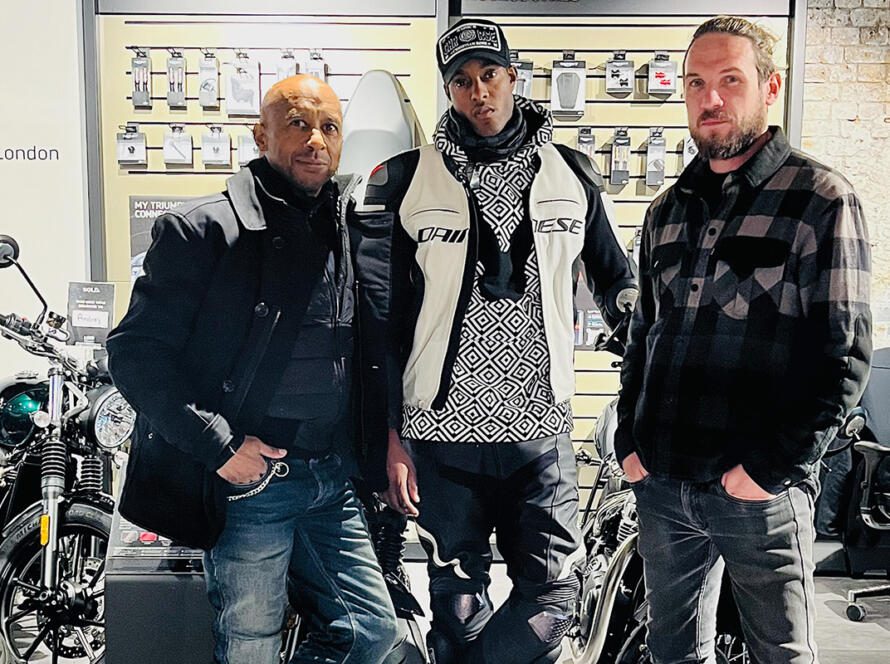
A few years ago my sons and I met for a night out. When we arrived at the pub, we realised we were all wearing the same outfit.
We laughed and they said, “Dad knows best.”
At the time it felt like coincidence.
It turns out science now backs the look.
I am neither tall nor short, heavy nor thin. Most clothing fits me off the rack. I am the average man, and I am fortunate — almost anything looks decent on this frame.
But do not mistake fortune for accident.
My body is an ongoing project. It requires consistency, commitment, and the kind of discipline nobody sees. The same is true of my wardrobe.
After years of paying attention to both, I have learned something simple:
The ideal male body and the ideal male outfit share the same secret.
They look effortless.
They are not.
What Fitness Culture Gets Wrong
Many men assume the answer is size.
Lift heavier.
Get bigger.
Add more muscle.
Women will notice.
The science says otherwise.
A 2020 study published in Personality and Individual Differences asked participants from China, Lithuania and the United Kingdom to rank male bodies with different shoulder-to-waist ratios and body-fat levels.
Across all three countries the results were remarkably consistent.
Body fat predicted attractiveness more than muscle size.
The most attractive male bodies had:
Body fat: 12–15%
BMI: 23–27
Shoulder-to-waist ratio: about 1.57
In the UK the preferred body fat averaged 13%.
China was 13.2%.
Lithuania 14.2%.
Small differences.
One clear message:
Lean matters more than large.
The classic V-shaped torso — broad shoulders and a narrow waist — still matters.
But the study revealed something more important.
The waist matters most.
And waist size is determined by body fat, not by how many curls you did yesterday.
In other words:
You cannot sculpt your way out of what you carry.
What Fashion Culture Gets Wrong
Fashion makes a similar mistake.
It encourages men to chase trends, labels and endless variation.
But clothes do not transform a body.
They reveal it.
A lean body changes everything.
At around twelve percent body fat the waist narrows, the shoulders define themselves, and clothing falls naturally along the body’s lines.
Structure appears without effort.
The real lesson is simple:
A lean body makes simple clothing look intentional.
The same white T-shirt that hangs loosely on one man looks sharp on another.
The difference is not the shirt.
The Uniform That Always Works
That is why the most reliable uniform I know is also the simplest.
It has been my staple for thirty-five years.
Timeless training paired with timeless clothing.
Because the discipline that keeps a man lean enough to wear simple clothes well is the same discipline that teaches him he does not need a complicated wardrobe.
The principle is the same for body and clothing.
No excess.
No noise.
Everything intentional.
If Meta-Age were a fashion magazine, its rule would be simple:
Less is more.
The Jeans
Straight-leg jeans create a clean line from waist to ankle — relaxed without being loose, structured without being tight.
Most men don’t get denim wrong because of fashion.
They get it wrong because the jeans simply don’t fit.
Straight jeans avoid that problem.
They do not compete with the body.
They follow it.
They can be dressed up or down.
They are the foundation, not the statement.
The T-Shirt
Every thinking man owns a classic white T-shirt.
I have worn one for as long as I can remember.
Trends change.
The white crew-neck does not.
Research has even shown that a plain white T-shirt subtly enhances the V-shape of the male body — visually broadening the shoulders while narrowing the waist.
In other words, the simplest garment quietly reinforces the shape women already find most attractive.
But the white T-shirt existed long before any study.
It is working class.
It is essential.
It is the shirt you wear when you are not trying to impress anyone — which is often when you impress the right people most.
People who know me say the white T-shirt is synonymous with my name.
It is my second skin.
I have worn the same brand for decades.
When you find what works, you stop looking.
Put it on.
Forget about it.
Wear it.
Do not perform it.
Its simplicity affects posture, mood and presence. Without saying a word it communicates clarity.
What Remains
Once you understand the value of simplicity, you stop chasing things that add nothing but noise.
You protect your body because it is the only one you get.
You simplify your wardrobe because you realise you never needed much in the first place.
For me, that has meant thirty-five years of the same uniform — timeless training paired with timeless clothing.
The ideal male body is lean, balanced and disciplined.
The ideal male outfit is simple.
Both require attention.
Both look effortless.
But neither happens by accident.
The men who carry this look well are not born with it.
They build it — day after day, in ways no one sees.
It requires coherence — knowing who you are and living in alignment with it.
It requires confidence — the quiet kind that does not need decoration.
It requires accountability — showing up for your body and your standards whether anyone is watching or not.
And it requires standards — deciding that simplicity done well is better than excess done poorly.
These are not fashion principles.
They are life principles.
They reflect the Meta-Age ethos: clarity over noise, discipline over trends, and a body that reflects the standards you choose to live by.
So if you see a man dressed simply, do not mistake it for laziness.
Look closer.
What you are seeing is not fashion.
It is the outward expression of coherence, confidence, accountability and standards.
The quiet markers of a Meta-Age life.