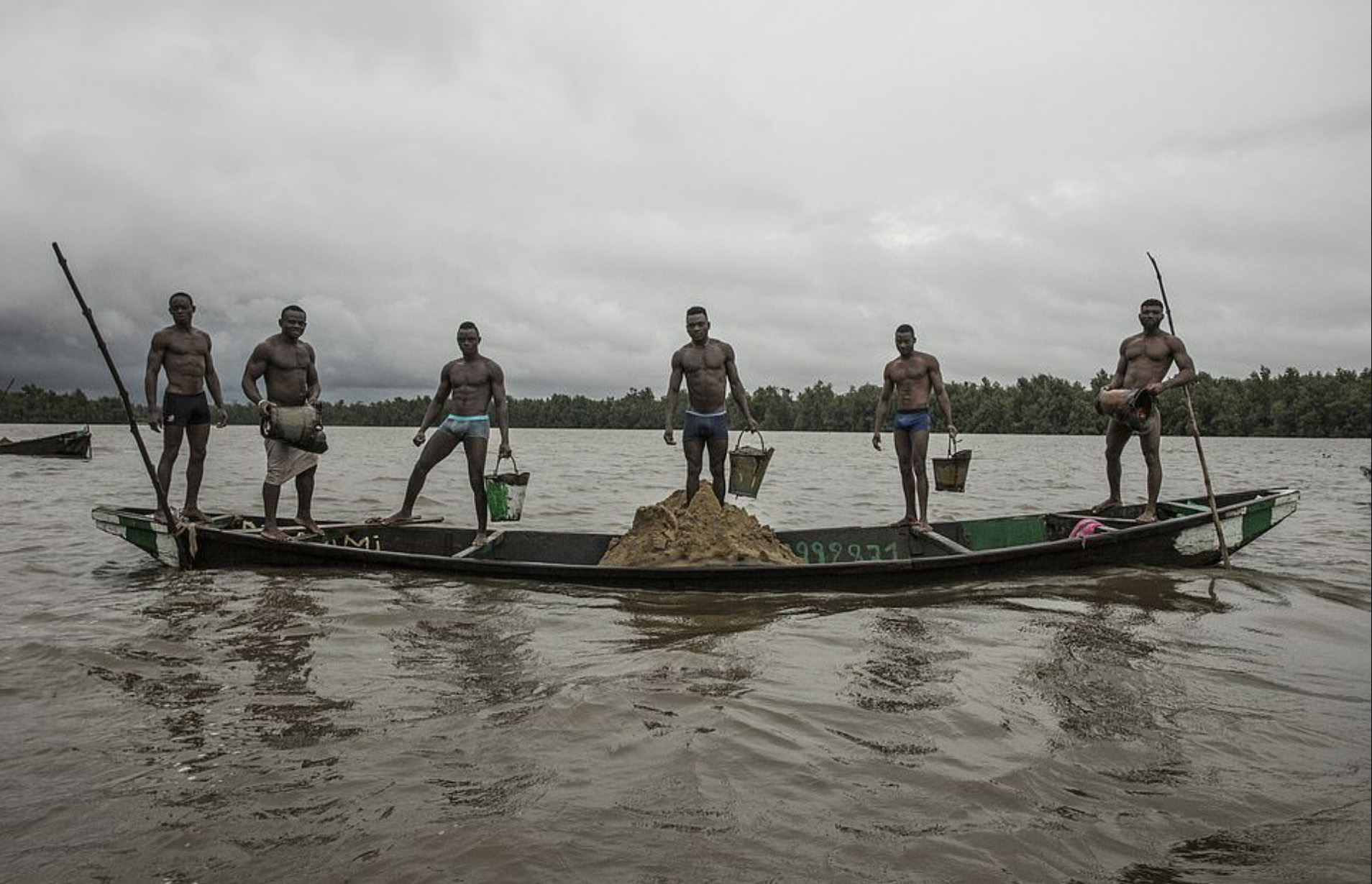
On the banks of the Sanaga River in Cameroon, a man picks up a 15-kilogram stone, ties it to a rope and drops backwards into brown water. He does not stretch. He does not prime his nervous system. He does not track a metric. He descends.
Thirty metres down, the river does not care how he looks. It only cares whether he can hold together.
For hours, he free-dives to the riverbed, scraping gravel for gold and diamonds. Ninety seconds below the surface. Sometimes two minutes. Then up. Then down again. His physique — lean, dense, durable — is not curated or periodised or sculpted for display. It is a response.
In the modern world, fitness is often treated as a project — optimised, measured, photographed. Muscle is built for mirrors. Strength is confused with size. Effort is equated with exhaustion. The diver’s body dismantles that narrative without speaking. Nothing about his strength is aesthetic. Everything about it is structural.
When I first saw photographs of Cameroon’s mining divers, I had an instant flashback.
As a teenager on my first visit to the Caribbean, I remember being struck by the fishermen. They were lean in a way that looked earned — not like bodybuilders. Mobile shoulders. Powerful torsos. Their bodies were tools shaped by water.
At the time, I was training in martial arts. My sensei — and my older brother — carried a similar build. Not bulky. Not rigid. But athletic, mobile, and quietly powerful. There was no excess. Nothing ornamental.
Even then, I sensed the difference between muscle built for display and muscle built for function.
The divers made that distinction unmistakable.
Underwater, compensation is not an option. The current shifts unpredictably. The load drags sideways. The lungs tighten. The nervous system recalibrates in real time. Movement must be integrated or it fails. He cannot isolate a muscle group or brace theatrically or rely on momentum. If his spine collapses, he rotates. If his hips misalign, he drifts. If his breath fractures, his strength dissolves. Thirty metres down, the body reveals its architecture.
A mirror shows muscle. It does not show organisation. Beneath visible musculature lies a quieter system — deep stabilisers and reflexive neuromuscular control that keep the spine coherent under load. These are muscles that act before movement, not after it. On land, impressive surface strength can coexist with structural neglect. For years, that neglect goes unnoticed — until it doesn’t. Back pain. Joint compression. Loss of balance. The slow realisation that the body was built like a sculpture — defined externally, unstable internally.
The diver cannot afford that mistake. Under pressure and intermittent hypoxia, force must transfer cleanly from legs to trunk to arms. Breath regulates structure. The spine remains organised because the environment demands it. He is not training these systems deliberately. He is using them. And use builds durability.
It would be easy — and dishonest — to romanticise this life. The work is dangerous. Fatigue accumulates. There is no structured recovery. Their bodies are tools, and tools wear down. But one physiological truth remains: the body adapts to the environment it inhabits — not the environment it intends to inhabit, but the one it repeatedly experiences.
The river imposes multidirectional resistance. It removes stable ground. It reduces oxygen. It demands integration. And the body reorganises accordingly. This principle — environment shaping architecture — sits at the core of the KunAqua method and is explored in KunAqua: The Deep Dive, where water is used deliberately to create structural honesty without the danger. Adaptation is not driven by vanity. It is driven by condition.
In youth, strength looks like size. It takes time to understand that size was never the point. True strength is not the muscle that bulges; it is the system that holds when load shifts unexpectedly. It is the spine that remains organised under pressure. It is breath that stabilises rather than panics. It is the capacity to adapt repeatedly without collapse. The river trains this without explanation. It removes cheats, exposes imbalance and demands coherence. In doing so, it produces what modern fitness often overlooks: durability.
Most of us will never descend thirty metres with a stone tied to our waist. But we all live under pressure — time, gravity, accumulated load, stress, injury, age. The question is not whether those forces exist. The question is whether we give our bodies the conditions to adapt to them.
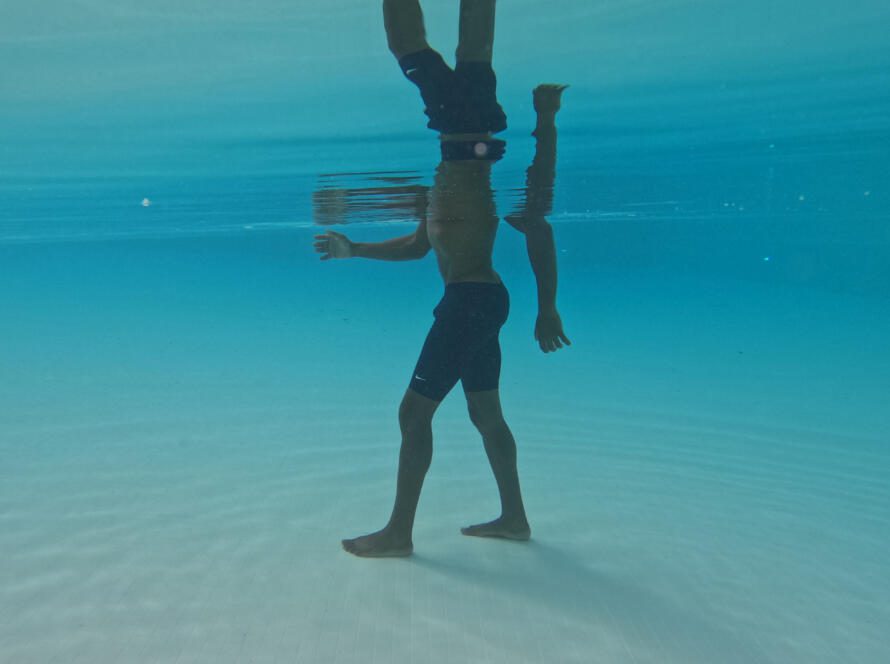
The divers did not design their training environment. It was imposed. The rest of us have a choice. We can train for appearance, or we can train for organisation. Water remains one of the most honest teachers of that distinction. It removes the ground, removes momentum and removes illusion. And when illusion disappears, the body reorganises.
The river does not reward aesthetics. It rewards integration, breath and structural truth. Because the body reorganises to what it is repeatedly exposed to. The only question is whether we choose that exposure deliberately.